
Gray Hair & the Wisdom of Becoming
By Amy Lupton
There is a point in life when the mirror starts telling a slightly different story.
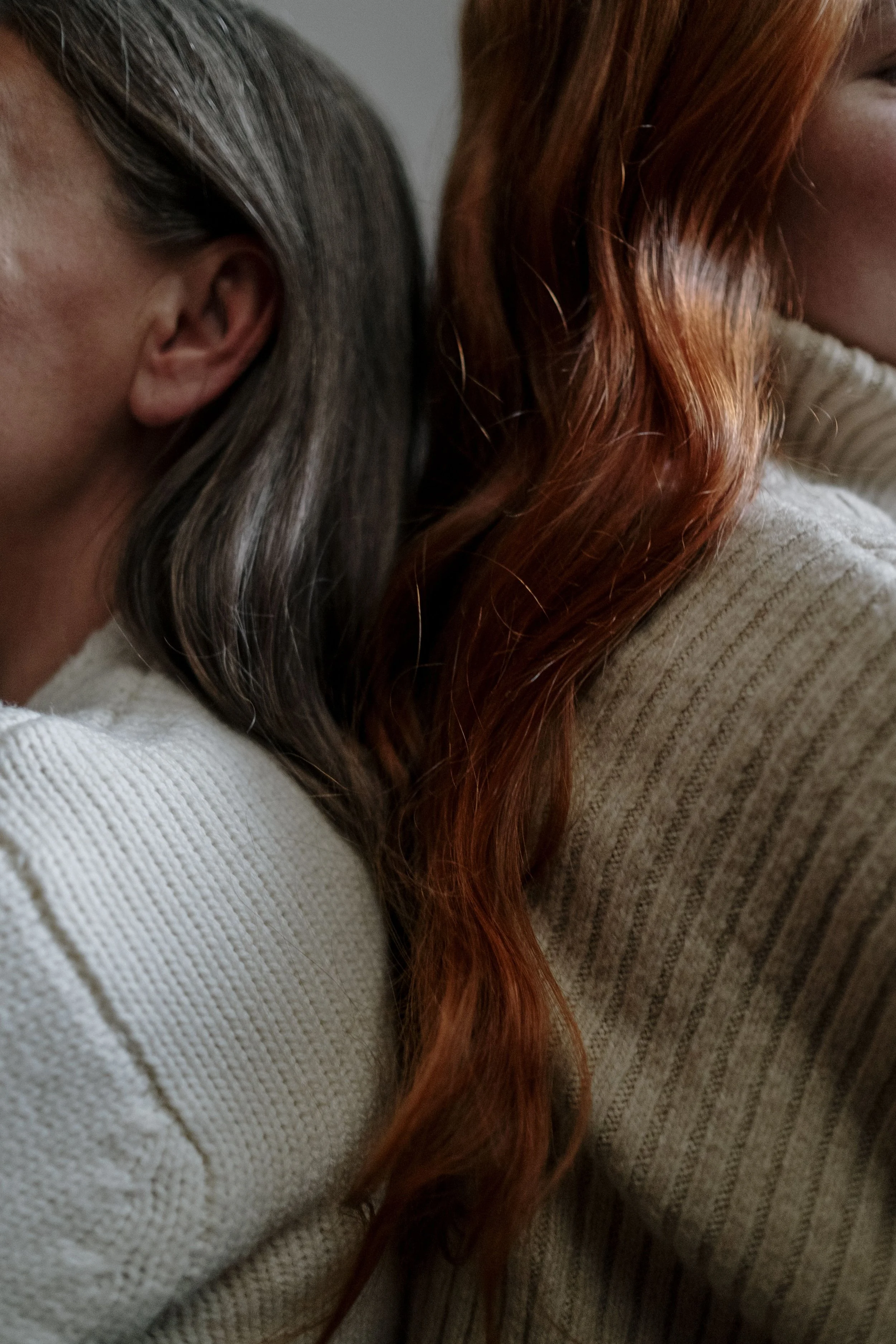
Maybe you notice one silver hair near your temple. Then a few more. Maybe your ponytail feels a little thinner than it used to, your curls have changed their mind about what they want to do, or your hair feels drier and more delicate than it once did. Maybe your scalp shows a little more at the crown, or you are finding more hair in the shower drain than usual.
For many women, these changes begin around perimenopause and menopause, when changing hormones can affect hair texture, growth, density, and shedding.
And while it is completely normal to want to care for your hair, I think it is also important to say this clearly: aging is not a bad thing. Gray hair is not a failure. A softer face, changing body, silver strands, and a different rhythm of energy are not signs that you are doing life wrong.
They are signs that you have lived.
Aging gracefully does not have to mean pretending nothing is changing. It can mean caring for yourself with attention and tenderness while making peace with the fact that life moves, bodies change, and there is beauty in becoming more fully yourself.
You can color your hair if that feels good to you.
You can wear your silver proudly if that feels good to you.
You can use scalp oils, book a haircut, take a closer look at your nutrition, get blood work done, drink your tea, and still believe that every strand of silver belongs to a woman who has earned her wisdom.
When Hair Changes Feel Like Clues
Some changes in hair are a normal part of aging.
Others can be the body's way of asking for a little more support.
During perimenopause and menopause, many women notice:
More hair in the shower drain, brush, or on the pillow
A widening part or less density around the crown
Finer, drier, or more fragile strands
More breakage
A change in curl pattern or texture
Hair that seems slower to grow back after shedding
More visible gray or white hair
Why Hair Turns Gray
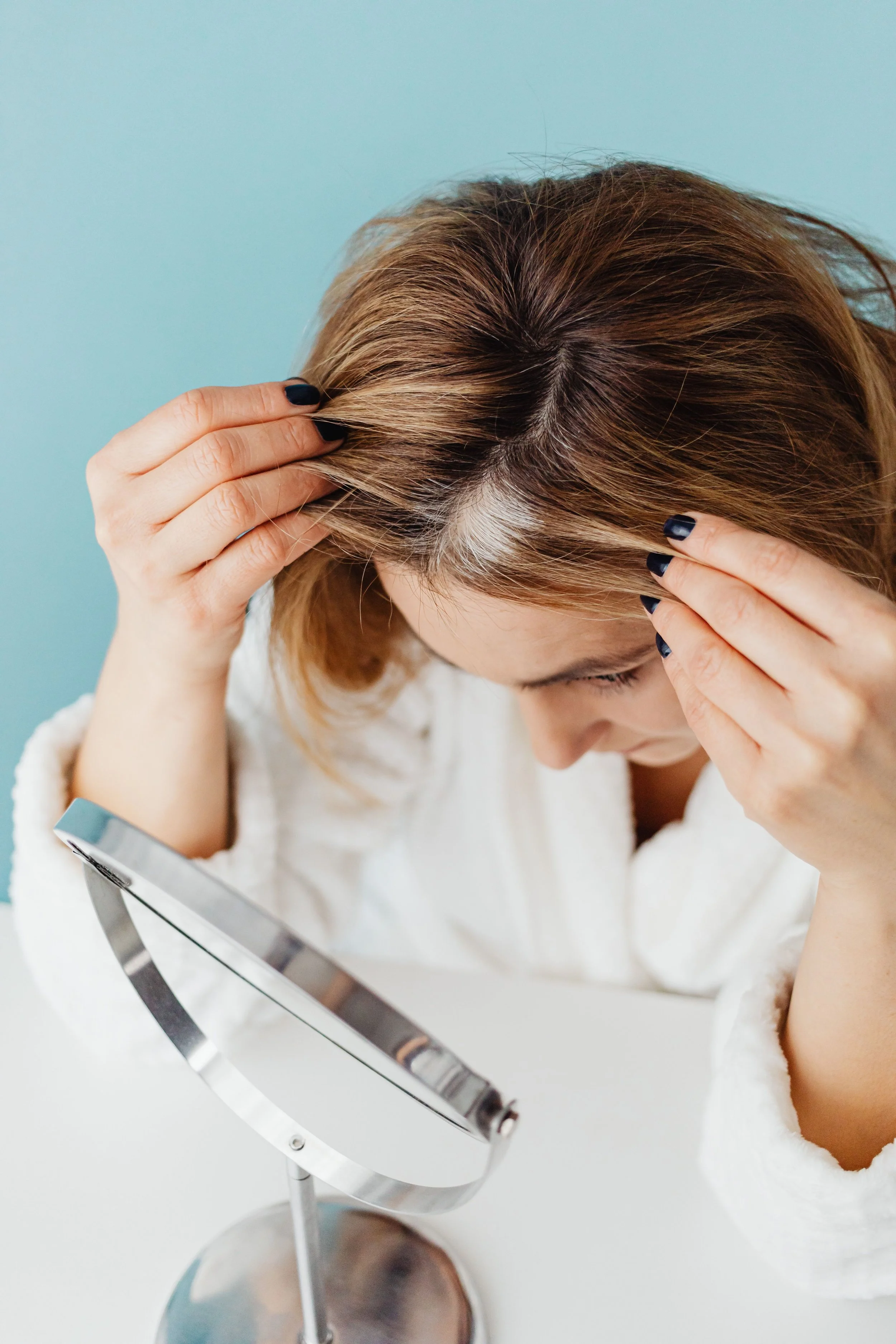
Gray hair happens when the pigment-producing cells in the hair follicle gradually make less melanin. Genetics play a large role, which is why some women go silver early while others keep more of their natural color well into later life.
There is no one food, supplement, tea, or herb that can reliably reverse gray hair.
That is okay. The goal does not have to be chasing an impossible version of "anti-aging."
The goal can be to help your hair, scalp, body, and nervous system feel supported as you move through this season.
When to Check In With a Provider
At the same time, if you are noticing a sudden change, significant shedding, bald patches, itching, scalp pain, or hair loss that feels alarming, it is worth checking in with a dermatologist or qualified healthcare provider. Hair changes can sometimes be connected to iron deficiency, thyroid changes, nutritional deficiencies, stress, hormonal shifts, scalp conditions, medication changes, or other health concerns.
Think of it this way: your hair can be part of your body's conversation with you.
It is not always a message of something serious, but it can be a gentle clue to slow down, get curious, and see what support may be needed.
A Chinese Medicine Perspective on Hair and Aging
In Chinese medicine, hair is often described as the "surplus of Blood" and an outward expression of Kidney Essence, also called Jing.
This is a traditional energetic framework, not a medical diagnosis. Still, it offers a beautiful way of thinking about hair changes.
Think of your body as having two energy accounts:
Qi (pronounced "Chee") is your checking account. It is the energy you use every day, for waking up, moving, digesting food, thinking, working, managing stress, and recovering from ordinary activity. Qi moves in and out constantly. You spend it, then replenish it through sleep, nourishing food, breathing, rest, movement, and supportive routines.
Jing is your savings account. In Chinese medicine, Jing is your deeper reserve, something you are born with and protect over time. It supports long-term vitality, growth, reproduction, development, healthy aging, and the body's ability to recover after prolonged strain
When your checking account is low, you may be able to rebuild it fairly quickly with a good meal, a restful night of sleep, hydration, a slower day, or time outdoors.
But if you repeatedly spend more Qi than you restore, eventually the body may need to draw from its "savings" your Jing.
The Key Idea: Deposits and Withdrawals
Using Qi is normal. We are meant to use energy every day.
The concern is when life becomes a pattern of constant withdrawals without enough deposits:
Poor or insufficient sleep
Chronic stress or overwork
Skipping meals or under-eating
Illness or long recovery periods
Excessive exercise without adequate recovery
Caring for everyone else while never restoring yourself
Years of pushing through fatigue
In this analogy, a stressful week may lower your checking account. But years of depletion can feel more like dipping into savings.
How This Relates to Aging
In Chinese medicine, Jing is often connected with the Kidney system and with the natural aging process. Changes such as reduced stamina, slower recovery, changes in hair quality, thinning hair, or gray hair may be viewed as signs that the body's deeper reserves need more protection and support.
That does not mean gray hair is simply caused by stress or that it can always be reversed by "restoring Jing." Gray hair has many influences, including genetics and normal aging.
But the traditional idea offers a useful reminder: when the body has been under long-term demand, it may show signs that it needs a more sustainable rhythm.
This is why Chinese medicine places so much value on protecting your energy before you reach burnout. You do not have to wait until your body is exhausted to begin making deposits.
In this system, the Kidneys are said to store Jing, our deep reserve of inherited vitality, reproductive energy, resilience, and capacity for renewal. The Liver is said to store Blood, which is traditionally understood to nourish the hair, skin, nails, tendons, and eyes.
When Blood and Essence are well nourished, hair is traditionally described as full, lustrous, and strong. When the body has been depleted, overextended, undernourished, or under too much stress for too long, hair may become drier, thinner, more brittle, or begin to gray earlier.
I find this perspective compassionate because it does not ask, "What is wrong with me?" It asks better questions:
What has my body been carrying?
Where have I been giving more than I have been receiving?
Am I sleeping enough?
Have I been rushing through meals, skipping meals, or under-fueling?
Is stress living in my body all day long?
What would it look like to build more nourishment into my regular life?
In Chinese medicine, the emotion associated with the Kidneys is fear. That does not mean fear causes gray hair, and it certainly does not mean we should blame ourselves for anxiety, uncertainty, caregiving, overwork, grief, or hard seasons.
It simply gives us another way to understand why rest, steadiness, warmth, nourishing food, boundaries, and feeling safe in our own lives can matter so much.
Nourish the Roots: Food for Hair and Vitality
Hair is made mostly of protein, so the health of our hair is connected to the overall nourishment we are taking in.
Many women and men reach midlife after years of dieting, skipping meals, trying to eat less, taking care of everyone else first, or simply being too busy to sit down for a real meal. Add hormonal changes, stress, disrupted sleep, digestive changes, and shifting activity levels, and it makes sense that the body may begin asking for a different kind of care.
Rather than hunting for one magic "hair food," focus on regular meals that contain enough protein, healthy fats, fiber, minerals, and overall calories for your body's needs. Restrictive dieting, rapid weight loss, low protein intake, and nutrient deficiencies can contribute to shedding for many people.
Include Protein Regularly
Try to include protein at meals and snacks in a way that works for your body, preferences, activity level, and health needs.
Helpful options may include:
Eggs, fish, poultry, meat, and dairy if those work for you
Properly prepared beans, lentils, and pulses
Greek yogurt, cottage cheese, or unsweetened high-protein yogurt
Bone broth as a nourishing addition
Collagen-containing foods or collagen peptides as an optional addition
Think Mineral-Rich and Colorful
From a Chinese medicine perspective, deeply nourishing foods are often warming, mineral-rich, colorful, and grounding. You do not have to eat perfectly. Just begin adding more of these foods into your regular rhythm:
Dark leafy greens
Black beans, lentils, and other legumes
Black sesame seeds (a Chinese superfood for the hair)
Eggs
Sardines, salmon, shellfish, and other seafood when appropriate
Root vegetables and winter squash
Mushrooms and cooked greens
Soups, broths, stews, and slow-cooked meals
Walnuts, pumpkin seeds, hemp seeds, and sesame seeds
Berries, blackberries, prunes, dates, and other deeply colored fruits
Oats and properly prepared gluten-free whole grains as tolerated
For many women, a warm bowl of soup, a pot of beans with broth, eggs with greens, or a hearty meat and veggie bowl can be more supportive than another expensive supplement.
Lab Testing Guide Supplementation
If your hair changes feel significant, it can be more useful to ask, "Is there something my body is low in?" rather than automatically buying every hair, skin, and nails supplement on the shelf.
A practitioner may consider your symptoms, diet, medical history, medications, and appropriate testing. Depending on the person, that may include thyroid testing, vitamin D, vitamin B12, zinc, and other evaluation when appropriate.
Supplements may be helpful when they are targeted to a real need. More is not always better. Many women have found an organ meat supplement can be rounded and helpful at filling in the gaps. Feel free to reach out for recommendations :)
Be especially cautious with high-dose biotin. It can interfere with certain lab tests, including some hormone and heart-related tests. If you take a hair supplement containing biotin, let your healthcare provider know before laboratory work.
Herbs as Gentle Support
Herbs can be beautiful allies during midlife. They can support nourishment, digestion, stress resilience, sleep, hydration, and the small daily rituals that help us feel cared for.
But herbs do not need to carry the burden of promising to reverse gray hair or cure hair loss. I prefer to think of them as part of a wider practice of tending ourselves well.
Herbal Allies
There are many gentler herbs and food-like botanicals that can be part of a nourishing routine:
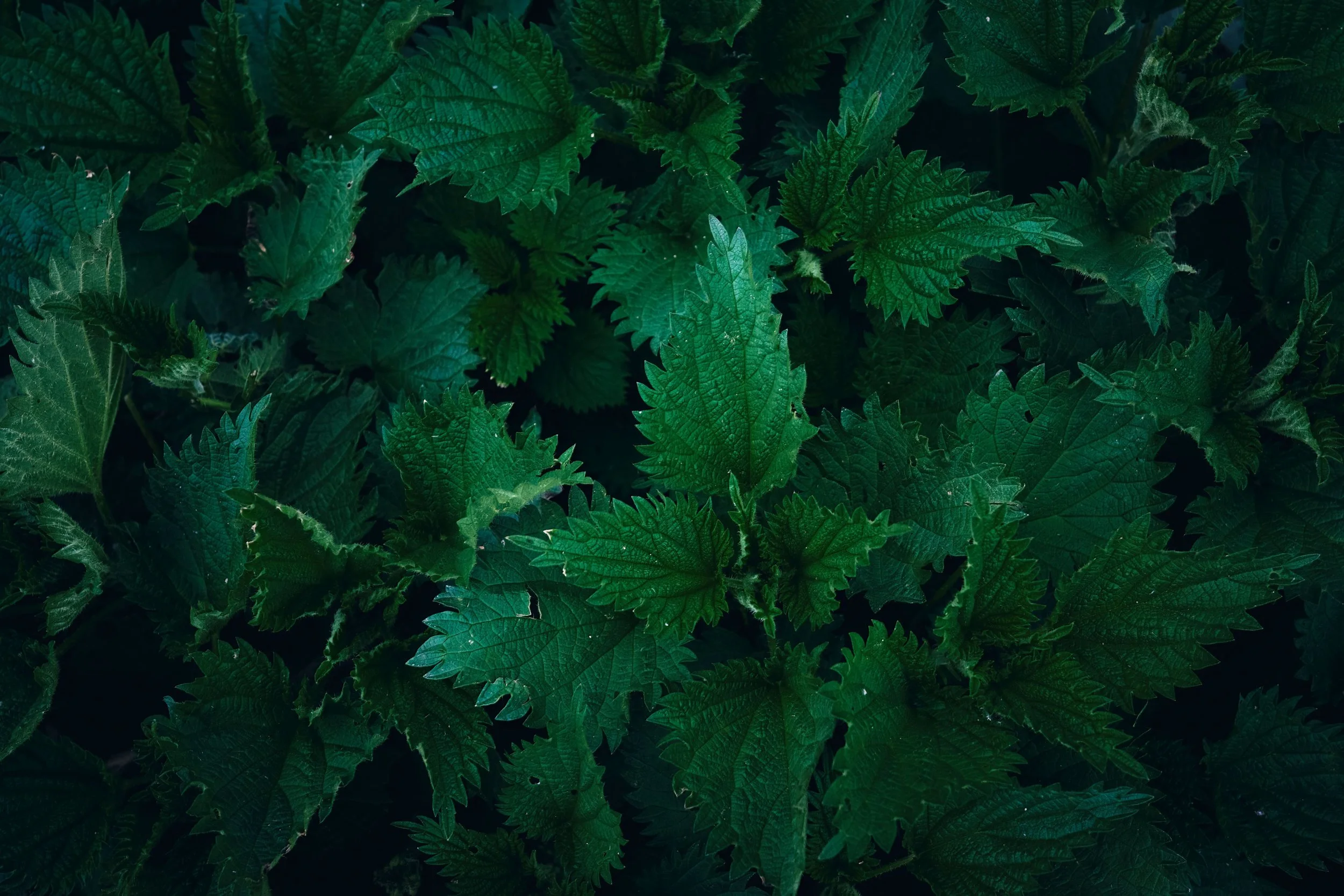
Nettle leaf: A mineral-rich herb that makes a lovely daily infusion. It is not a cure for gray hair, but it can be a deeply nourishing addition to a food-forward wellness practice.
Oatstraw: A gentle, nourishing herb that pairs beautifully with nettle.
Rosehips: Bright and tart, with vitamin C that can support absorption of non-heme iron from plant foods.
Hibiscus: A vibrant, tangy herb that can be lovely in tea blends.
Rose: Adds beauty, softness, and pleasure to a daily tea ritual.
Lemon balm: A gentle herb for the days when you need a reminder to soften your shoulders and take a breath.
Spearmint or peppermint: Fresh, comforting additions for flavor and digestion.
Black sesame seeds: More food than herb, but traditionally used in Chinese dietary therapy as a nourishing food for the Liver and Kidneys.
He Shou Wu, also called Fo-Ti, Polygonum multiflorum, or Chinese knotweed, is a traditional Chinese herb often associated with supporting Liver Blood, Kidney Essence, vitality, and premature graying.
Spirulina or chlorella: a great nourishing food to add deep minerals into the diet.
Digestion Matters Too
Hair health does not exist separately from digestion.
If we are not eating enough, not absorbing nutrients well, dealing with chronic digestive discomfort, avoiding too many foods, or struggling with constipation, our body may have a harder time getting the nourishment it needs.
In Chinese medicine, the Spleen and Stomach are often described as the center of transformation and transportation. In simple terms, this means they help turn food into usable energy, Blood, and Qi.
From a modern perspective, digestion matters because the body needs to break down, absorb, and use the nutrients we eat.
Constipation is common during times of stress, travel, hormonal change, low activity, dehydration, disrupted routines, or not eating enough fiber.
Gentle basics can make a real difference:
Eat regular meals rather than going long stretches without enough food.
Add fiber-rich foods gradually.
Drink enough water and warm fluids.
Include cooked vegetables, beans, berries, oats, and gluten-free whole grains as tolerated.
Enjoy fermented foods such as yogurt, kefir, sauerkraut, kimchi, or miso if they work well for you.
Take a short walk after meals.
Give yourself time to sit, chew, breathe, and eat without rushing when you can.
Adults generally need about 22 to 34 grams of fiber daily, although individual needs vary and it is best to increase fiber gradually.
Move, Rest, and Protect Your Reserves
Healthy aging does not require punishing workouts, extreme diets, or relentless self-improvement.
The older I get, the more I believe movement should build us up rather than wear us down.
Walking, strength training, Pilates, dancing, yoga, mobility work, tai chi, qigong, gardening, and time outdoors can all support circulation, mood, digestion, sleep, muscle, bone health, and overall resilience.
Movement can also support bowel regularity, especially when paired with enough fiber and fluids.

But rest is just as important.
Sometimes the most supportive thing we can do for our hair, hormones, mood, digestion, and nervous system is not another protocol.
It is going to bed earlier.
Eating a warm meal.
Taking a walk without our phone.
Sitting in the sun.
Letting someone else help.
Saying no.
Taking three slow breaths before moving into the next thing.
In Chinese medicine language, rest helps protect Jing.
In everyday language, it helps us stop spending more energy than we are receiving.
Silver Strand Nourishing Infusion
This tea is not meant to reverse gray hair. It is a ritual of warmth, hydration, nourishment, and self-regard.
It is a way to pause long enough to remember that your body is not a problem to solve.
Ingredients
2 parts nettle leaf
2 parts oatstraw
1 part rosehips
1 part lemon balm
½ part rose petals
½ part spearmint or peppermint, optional
½ part dried orange peel or lemon peel, optional
To Make One Cup
Use 1 to 2 tablespoons of the blend per 10 to 12 ounces of hot water. Cover and steep for 10 to 15 minutes.
For a stronger mineral-style infusion, use about 2 tablespoons of the blend in a quart jar. Fill with hot water, cover, and steep for several hours or overnight. Strain and refrigerate.
The Ritual
Before your first sip, place one hand over your heart and one hand over your low back.
Take three slow breaths.
Notice what you have been carrying.
Then offer yourself this simple sentence:
"I nourish what has carried me. I welcome the wisdom becoming visible."
Drink slowly. Let the ritual be less about doing everything perfectly and more about returning to yourself.
The Invitation
Gray hair can be a cosmetic choice, a family inheritance, a personal grief, a delight, a surprise, or all of those things at once.
There is room for hair appointments, root touch-ups, scalp massage, nourishing meals, blood work, strength training, good sleep, and a beautiful cup of tea.
There is also room to stop treating every sign of age as proof that something has gone wrong.
Our bodies are not meant to stay the same forever. They are meant to carry us through seasons: through work, caregiving, grief, love, meals shared, disappointments survived, joys celebrated, and years lived.
The silver strands may be an invitation to nourish more deeply, rest more fully, move more kindly, tend digestion, protect your reserves, and listen to the woman you are becoming.
Aging gracefully is not about disappearing, shrinking, or trying to look untouched by life.
It is about becoming more at home in yourself.
And there is something deeply beautiful about that.
